Buying land near Troy can feel simple at first glance. Then the real questions show up fast: Can you build what you want, will the property need septic, and are there restrictions hiding in the records? If you want to avoid expensive surprises, it helps to understand how land purchases work differently from a typical home sale. In this guide, you’ll learn the key steps to buying land or acreage near Troy, Bell County, and what to confirm before you close. Let’s dive in.
Define your land goals first
Before you look at acreage, get clear on how you want to use it. Texas A&M AgriLife recommends starting with the property’s main purpose because that decision affects your location, budget, financing, and even possible property-tax treatment.
Your goal could be to build soon, hold the land for future use, keep livestock, enjoy recreation, or maintain agricultural use. Each path creates a different checklist, and that is especially true around Troy, where land inside city limits can work very differently from rural Bell County tracts.
Match the tract to your intended use
A homesite near utilities may fit a future build better than a fully rural tract. On the other hand, if you want more elbow room, agricultural use, or long-term holding potential, land outside the city may be a better fit.
This is why your first question should not be, “How many acres do I want?” It should be, “What do I need this land to do for me over the next few years?”
Build a budget beyond the price
With acreage, the purchase price is only part of the story. Texas A&M AgriLife notes that buyers should also budget for surveys, title work, fencing, water infrastructure, access improvements, property taxes, insurance, and ongoing carrying costs.
That means a lower-priced tract is not always the better deal. If it needs driveway work, utility planning, fencing, or septic approvals, your total cost can rise quickly.
Know where the land sits
Near Troy, location is not just about commute time or scenery. It also affects what rules apply to the property today and what may change later.
Troy sits along the I-35 corridor between Temple and Waco and describes itself as a small bedroom community. For buyers, that often means comparing land inside city limits, land that could be annexed later, and more rural tracts in Bell County.
Troy zoning matters inside city limits
Inside Troy city limits, zoning is formal and specific. The city has a zoning ordinance and zoning map, and its ordinance includes 13 zoning districts.
One important example is the Agricultural District. According to Troy’s ordinance, that district allows detached single-family residences and accessory structures on a minimum one-acre tract.
If a property has been newly annexed, the ordinance says it is temporarily classified as Agricultural District until the City Council establishes permanent zoning. That can be important if you are planning a build, outbuildings, or a specific long-term use.
County land works differently
Outside the city, Bell County land usually does not follow city-style zoning rules. Texas counties generally have limited land-use authority and do not zone in the same way cities do.
That does not mean rural land is unrestricted. County platting rules, recorded easements, deed restrictions, and property owners’ association rules can still shape what you can do with the property.
Check restrictions before you offer
One of the biggest mistakes acreage buyers make is assuming open land means flexible use. In reality, a tract can look wide open and still have strict recorded limits.
Texas Real Estate Research Center guidance explains that private land-use rules may include restrictive covenants, HOA rules, and easements. Those documents can affect building placement, access, utility areas, and other future plans.
Review deed restrictions and easements
Before you move forward, confirm whether the tract has:
- Recorded deed restrictions
- Property owners’ association rules
- Utility easements
- Access easements
- Rights-of-way that affect usable space
These details matter because they can reduce where you place a home, barn, driveway, or septic system. They can also affect resale later.
Review title and property rights carefully
Land purchases often involve more moving parts than a standard house closing. Title review is one of the most important steps because it helps you confirm exactly what is being conveyed.
Texas A&M AgriLife recommends reviewing ownership history, deed restrictions, easements, liens, leases, and property-tax status. A current survey is also strongly recommended to confirm boundaries, acreage, legal access, encroachments, and rights-of-way.
Do not assume every right transfers
With land, not every right automatically comes with the sale. AgriLife warns that surface rights, groundwater rights, surface-water rights, mineral rights, and wind rights may have been severed or reserved.
Existing leases can also stay attached to the property. Grazing, farming, wind, or solar leases may affect how you use the tract after closing, so it is smart to ask direct questions early.
Use the right contract and professionals
Texas Bar guidance recommends using a Texas Real Estate Commission farm-and-ranch contract or an attorney-drafted agreement tailored to the property. It also recommends bringing in the right consultants early, such as a surveyor, engineer, architect, or environmental site assessor.
That advice matters because the value of acreage depends on more than the map. Access, site conditions, and what can actually be built often determine whether the property fits your plans.
Understand property taxes before closing
Property-tax treatment can shape your long-term costs, especially if you are buying acreage with agricultural or open-space use in mind. This is an area where you want facts, not assumptions.
The Texas Comptroller explains that agricultural and open-space special appraisal is based on the land’s productivity value rather than market value. Bell CAD also notes that agricultural valuation is not a true exemption.
Ask about ag valuation history
Texas Bar guidance says open-space appraisal generally requires the land to have been devoted principally to a qualifying use for five of the preceding seven years. If that valuation is already in place, you need to understand what supports it and what could cause it to end.
The Texas Comptroller also states that rollback tax can apply if land receiving agricultural appraisal later changes to a non-agricultural use. If your long-term plan is to build or change use, this deserves careful review before you buy.
Know how homestead rules may apply later
If you plan to build and occupy a home on the property, Bell CAD says the homestead exemption applies to owner-occupied residential properties. State law allows the homestead area to include up to 20 acres.
Bell CAD also says homestead applications are filed between January 1 and April 30 and generally do not require annual renewal unless requested by the chief appraiser. That may help once your home is built and occupied, but it is still important to understand how the land is taxed before that point.
Verify water, septic, access, and drainage
Utilities can make or break a land purchase. Near Troy, this step should happen before closing, not after.
Bell County’s Public Health District regulates on-site sewage facilities. Its permitting materials show that the application process asks for the water source, legal description, site evaluator, and design information.
Septic is not a simple checkbox
Some properties do not have city sewer access and must use on-site sewage disposal. Bell County’s materials also make clear that site and soil conditions affect where a system can go, and construction should not begin before approval.
That means the tract may need site testing, permit review, or reserved drainfield space before your plans can move forward. A property that looks buildable on paper may still have layout limits once septic requirements are considered.
Water and utility service vary by location
Inside Troy, the city provides water, wastewater, and garbage services and publishes current service-rate notices. That can make some in-town or near-town parcels easier to evaluate than fully rural land.
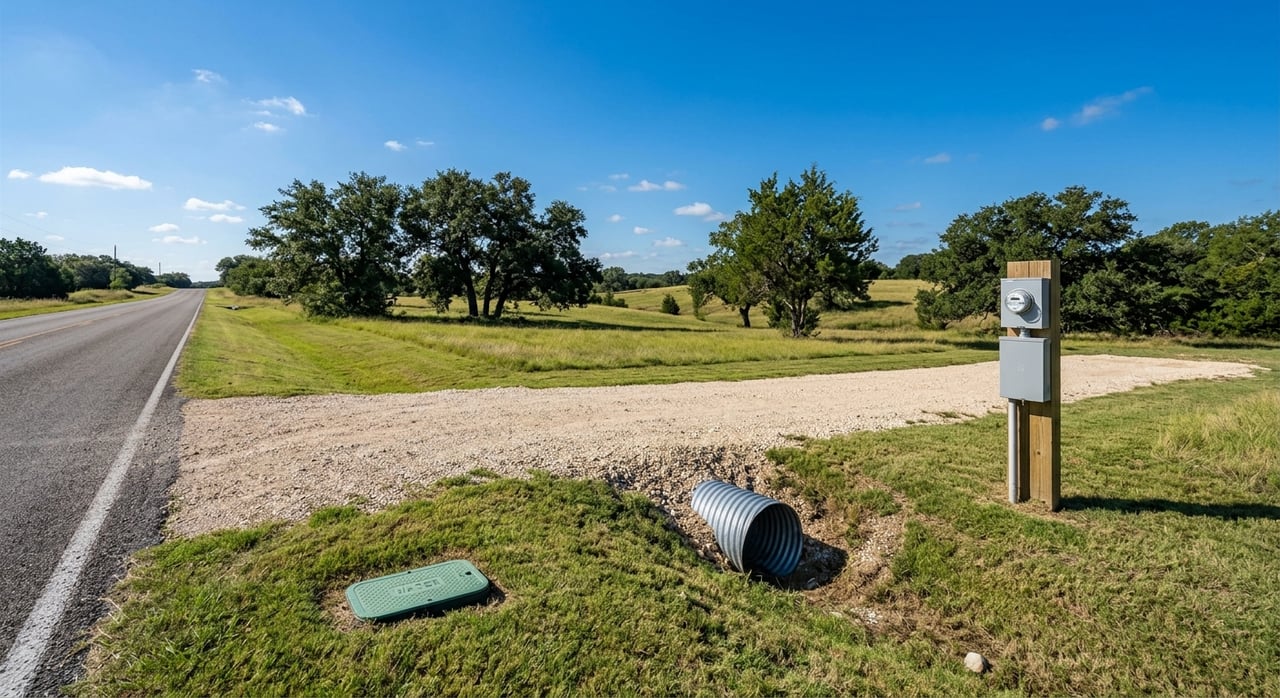
On more rural acreage, you will want to confirm how water service will work and what infrastructure may be needed. This is one more reason your total budget should include more than the contract price.
Drainage deserves a closer look
Drainage often gets less attention than access or utilities, but it matters. Troy is working with the Texas Water Development Board on a drainage master plan and has asked residents to report flooding and drainage problem areas.
Before you buy, ask about runoff, low areas, drainage history, and whether any part of the tract has known flooding concerns. A good lot on a dry day can tell a very different story after heavy rain.
Build your due diligence team early
Acreage transactions go more smoothly when you bring in the right people early. Texas Bar guidance specifically points buyers toward professionals such as surveyors, engineers, architects, and environmental site assessors when needed.
Your lender, title company, and agent should also be part of the conversation from the start. Rural land financing can differ from a standard residential mortgage, and title review on acreage usually requires extra attention.
Key questions to ask before finalizing
Use these questions to help guide your due diligence:
- Is the tract inside Troy city limits, outside them, or in an area that could be annexed later?
- What zoning district applies today, and what uses are allowed?
- Are there deed restrictions, HOA rules, or easements on record?
- Does the title review show any leases, liens, or severed rights?
- Is there a current survey confirming boundaries and legal access?
- Will the property need septic, water infrastructure, driveway work, or drainage improvements?
- Is an agricultural or open-space valuation in place, and what would change that status?
These questions can help you spot common red flags, including unclear access, outdated surveys, undisclosed easements, limited water information, and assumptions about tax status or property rights.
Why local guidance matters near Troy
Buying land near Troy is not just about finding acreage you like. It is about matching the property to your goals, checking city versus county rules, and verifying the details that affect buildability, cost, and long-term use.
If you take the process step by step, you can move forward with more confidence and fewer surprises. That is especially helpful in a market like Bell County, where one tract may have city services and zoning while another depends heavily on private restrictions, septic review, and rural infrastructure.
If you are thinking about buying land or acreage near Troy, working with a local guide can help you ask the right questions early and avoid costly detours later. Reach out to Bradley Sheppard for practical, local insight on land opportunities across Bell County.
FAQs
What should you do first when buying land near Troy?
- Start by defining the property’s main purpose, such as building a home, keeping it in agricultural use, recreation, or long-term investment, because that affects budget, location, financing, and tax questions.
Does Troy, Texas have zoning for land?
- Yes. Troy has a formal zoning ordinance and zoning map, and the city’s ordinance includes 13 zoning districts.
Can you assume rural Bell County land has no restrictions?
- No. Outside city limits, private deed restrictions, HOA rules, easements, and county platting requirements can still affect how a tract may be used.
Why is a survey important when buying acreage near Troy?
- A current survey helps confirm boundaries, acreage, legal access, encroachments, and rights-of-way, which are all critical on land purchases.
What property-tax issue should you check on acreage in Bell County?
- You should review whether the land has agricultural or open-space valuation, how that status is supported, and whether a future change in use could trigger rollback tax.
Do land buyers near Troy need to check septic rules before closing?
- Yes. Some tracts do not have city sewer access, and Bell County regulates on-site sewage facilities based on site, soil, water source, and design requirements.